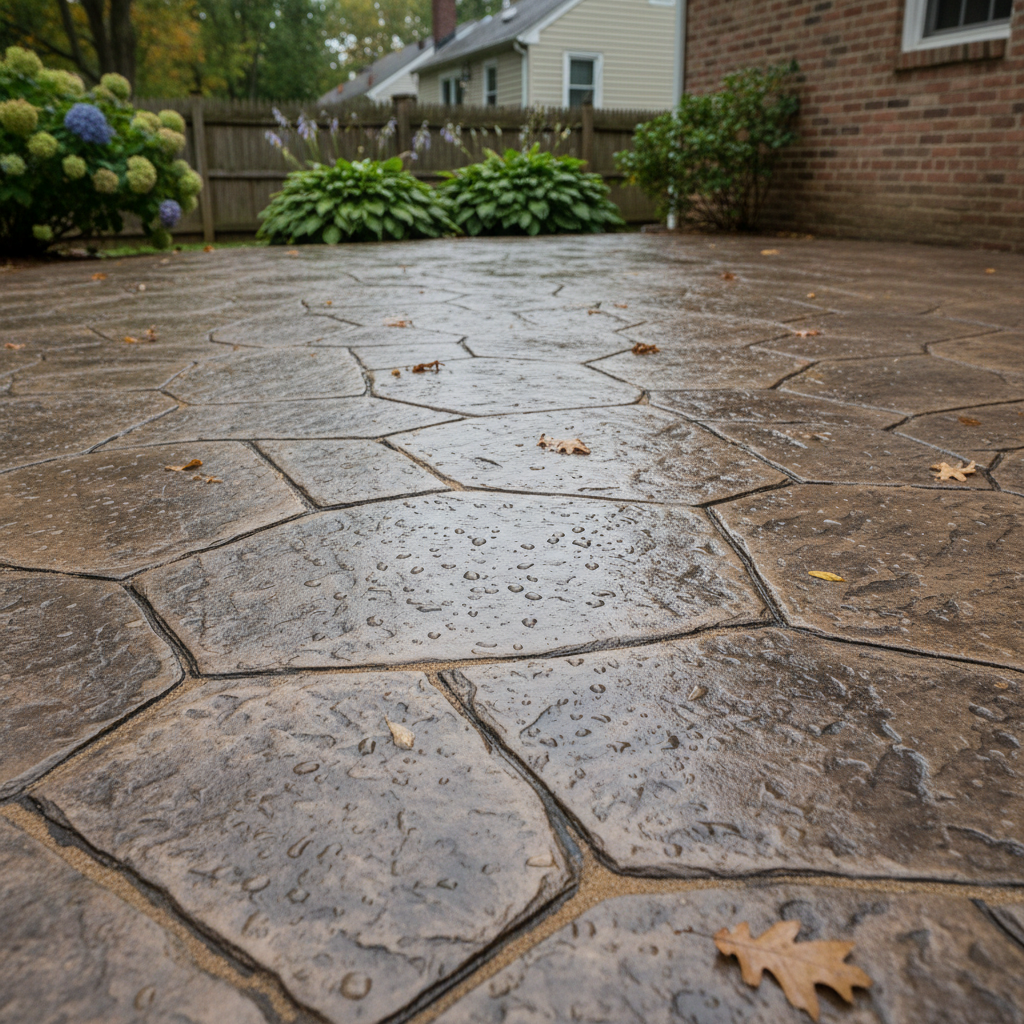
Want to upgrade that boring gray slab in your backyard without spending a fortune? Decorative concrete completely changes the look of plain pathways, patios, and pool decks, making them look like high-end slate, brick, or even weathered wood. But before you jump in with both feet, you need a solid plan. All Star Concrete Co will break down what actually goes into a decorative concrete project from start to finish around Wellesley, where our freezing winters and tricky soil can cause major problems for poorly planned jobs.
Before the Pour: Planning and Prep Work
Getting ready is ninety percent of the battle. If your sub-base is poor, your finished decorative surface will crack before the first snow flies. You have to evaluate the local ground conditions, especially if your property sits near areas with high water tables or heavy clay. Digging down, establishing proper drainage away from your foundation, and compacting the aggregate base thoroughly will save you massive headaches later.
- Mark out utilities and check property lines.
- Excavate deep enough to fit a proper crushed stone sub-base.
- Build sturdy wooden forms that will not bulge under heavy wet mix.
Can you handle the prep yourself? If you have a weekend, a rental skid steer, and a strong back, you can knock out the basic excavation and form-building. But if you are dealing with major slopes or bad drainage, you will want to hand those reins over to a crew like All Star Concrete Co right from the start.
During the Project: Stamping, Staining, and Timing
This is where the work happens, but it is also where things go sideways fast. Stamping concrete requires speed. Once that truck rolls up, the clock is ticking. You have a very narrow window to float the surface, broadcast color hardener, lay down release agents, and press your stamp mats before the mix starts setting up. Miss that window, and your pattern comes out shallow or uneven.
Staining existing slabs is a bit more forgiving for a weekend warrior, but acid-based chemical stains require careful scrubbing, neutralizing, and rinsing. If you botch the cleanup, the color will not take or seal correctly.
After the Project: Curing and Upkeep
Pouring the concrete is only half the battle. How you treat it afterward determines whether it lasts twenty years or two. Keep the fresh slab moist for a few days so it cures to its maximum strength. Once it is fully dry and clean, applying a quality breathable sealer locks out moisture and protects those vibrant colors from fading or getting chewed up by winter weather. Plan on rolling on a fresh coat of sealer every couple of years to keep it looking sharp.
At the end of the day, small staining touch-ups and annual sealing are great weekend projects for homeowners. For actual pours, custom stamping, and complex color layering, All Star Concrete Co provides Decorative Concrete services for homes in Wellesley, Massachusetts.