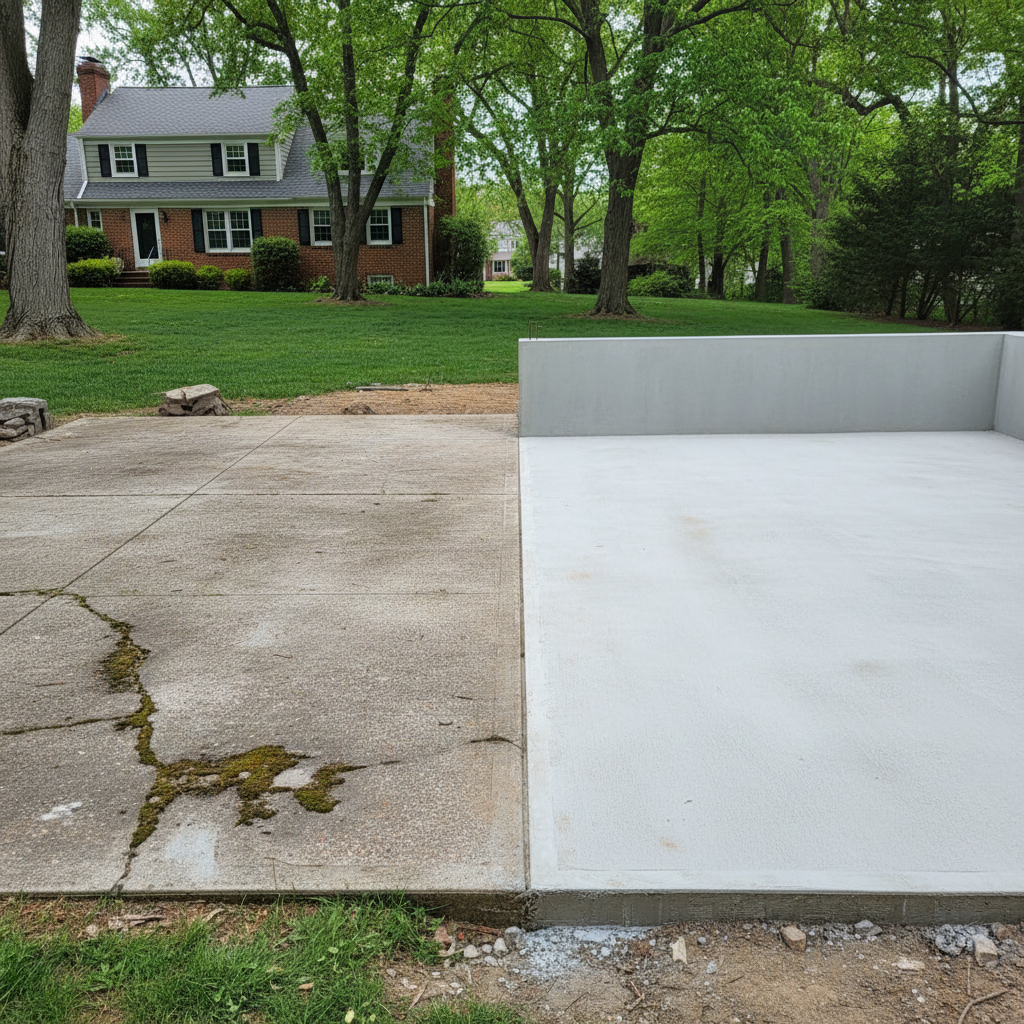
Alright, let's talk foundations. If you're building a new home or adding a significant extension here in Wellesley, one of the first big choices you'll face is what kind of foundation to go with. Generally, you're looking at two main options: poured concrete or concrete block. Both get the job done, but they're not created equal, especially when you consider our specific climate and soil conditions around here.
Poured Concrete Foundations: The Solid Choice
When I talk about poured concrete, I'm talking about a continuous, monolithic wall of concrete that's poured directly into forms on-site. Think of it like making a giant, seamless concrete box for your house to sit on. This is what we often recommend at All Star Concrete Co for most new construction.
Durability and Strength
This is where poured concrete really shines. Because it's a single, continuous unit, you don't have any joints or seams. That means fewer weak points for water to get in or for structural issues to develop. It's incredibly strong and resistant to lateral pressure, which is a big deal with our clay-heavy soils in some parts of Wellesley, like around the Fells, that can expand and contract with moisture. You get a solid, impermeable barrier that's tough to beat.
Water Resistance
No joints means less chance of water infiltration. We're talking about a solid wall. While no foundation is 100% waterproof without proper drainage and sealing, a poured wall starts with a significant advantage in keeping your basement dry. This is especially important given our New England winters and spring thaws, which can put a lot of hydrostatic pressure on foundation walls.
Cost
Initially, poured concrete can sometimes seem a little more expensive upfront than block. That's because of the specialized equipment needed for mixing and pouring, and the cost of the forms. However, in the long run, its durability and reduced risk of water issues often make it a more cost-effective choice.
Installation Time
Once the forms are set, the concrete can be poured pretty quickly. Then it's a matter of waiting for it to cure, which takes time. The whole process can be efficient, but you're somewhat at the mercy of the weather for pouring days.
Concrete Block Foundations: The Traditional Approach
Concrete block foundations, sometimes called CMU (concrete masonry unit) foundations, are built by stacking individual concrete blocks with mortar joints in between. It's a more traditional method that's been around forever.
Durability and Strength
Block foundations are strong, no doubt about it. They've supported countless homes for decades. However, their strength comes from the individual blocks and the mortar joints. Those joints are the weakest link. They're more susceptible to cracking over time, especially with ground movement or significant lateral pressure. We've seen plenty of older Wellesley homes with block foundations that have held up well, but they often require more vigilant maintenance.
Water Resistance
This is the biggest drawback for block foundations in our climate. Every single mortar joint is a potential entry point for water. Even with good waterproofing membranes applied to the exterior, block foundations are inherently more prone to moisture issues than poured concrete. You'll often see efflorescence (white, powdery deposits) on block basement walls, which is a sign of moisture trying to push through.
Cost
Generally, block foundations can be a bit cheaper on the initial build. The materials are less expensive, and the labor is different – it's more about skilled masonry work than heavy equipment operation. If budget is your absolute top priority and you're willing to potentially deal with more maintenance down the line, it might seem appealing.
Installation Time
Building a block foundation is a slower, more labor-intensive process. Each block needs to be laid individually, and the mortar needs to set. This can extend the foundation phase of your project.
My Recommendation for Wellesley Homeowners
Look, both options will give you a foundation. But if you're asking me, for a new build or a major addition here in Wellesley, I'm almost always going to steer you towards poured concrete. The superior strength, inherent water resistance, and long-term durability simply make it the better investment, especially considering our local weather patterns and soil conditions that can really stress a foundation.
You want a foundation that's going to stand strong, keep your basement dry, and give you peace of mind for decades. Poured concrete delivers on that promise more consistently than block. It might be a slightly higher upfront cost, but when you factor in potential future repairs, waterproofing issues, and the sheer structural integrity, it's a no-brainer for the value it adds to your home.
If you're planning a project and want to talk through the specifics for your property, give us a call at All Star Concrete Co. We're happy to walk you through the options and make sure you get a foundation that's built to last.