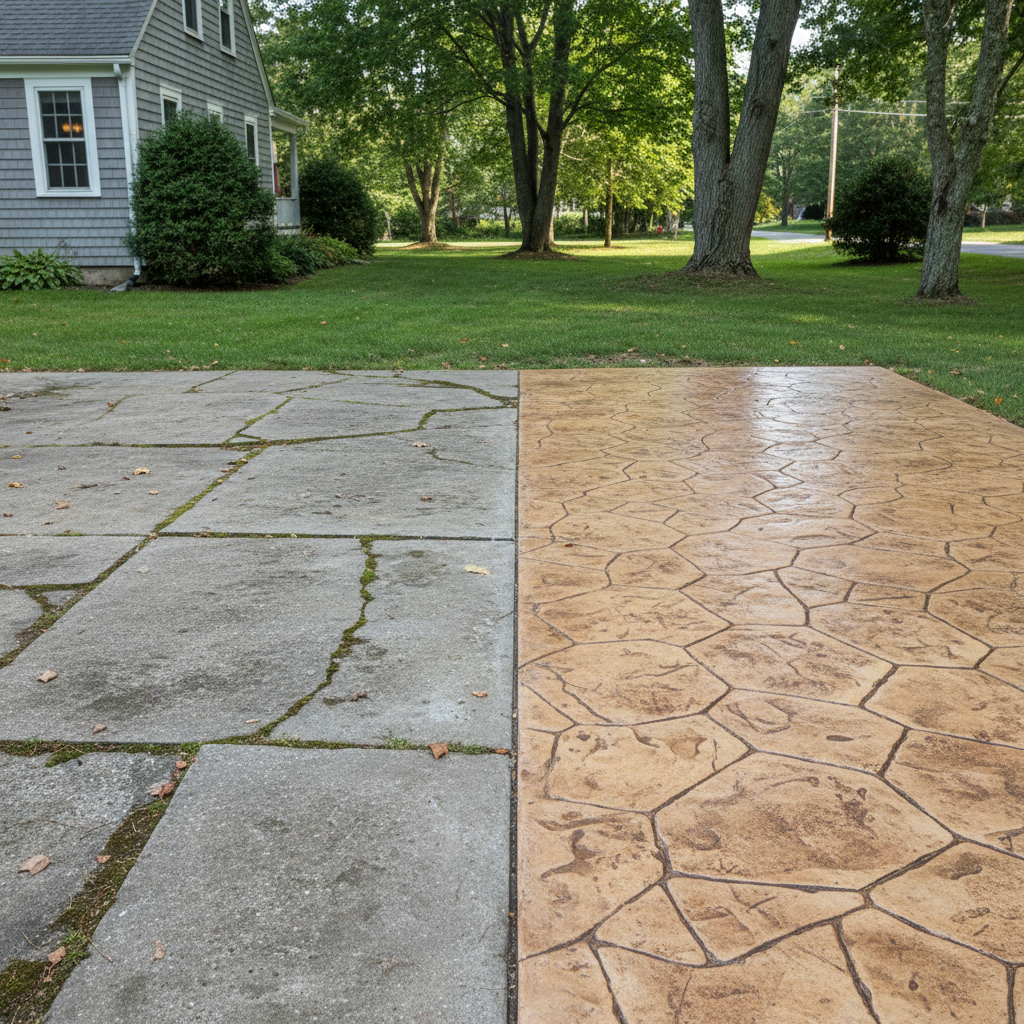
So, you're thinking about sprucing up your outdoor space, right? Maybe a new patio, a walkway, or even a pool deck. Concrete's a solid choice for durability, no doubt about it, but plain gray isn't always what folks picture. That's where decorative concrete really shines. For homeowners here in Wellesley, the two big options I get asked about most often are stamped concrete and stained concrete. They both look fantastic when done right, but honestly, they're pretty different animals. What's best for you really just depends on what you're hoping to achieve.
Stamped Concrete: Looks Like Stone, Brick, or Wood
Stamped concrete, sometimes called textured or imprinted concrete, is exactly what it sounds like. We pour fresh concrete, let it set up just enough, and then press large, flexible mats right into the surface. These mats have patterns molded into them that mimic natural stone like flagstone or slate, brick, even wood planks. We can also add color directly to the concrete itself, or apply surface colors and release agents to get a truly authentic, multi-toned look. It's pretty cool.
Pros of Stamped Concrete:
- Appearance: This is where stamped concrete really knocks it out of the park. You can get incredibly realistic textures and patterns. If you've always dreamed of a cobblestone driveway but don't want the headache or cost of individual pavers, stamping is your answer. The variety of patterns and colors is just huge.
- Durability: Don't forget, it's still concrete underneath, so it's tough as nails. When installed correctly and properly sealed, it stands up to our New England weather, from those hot summers to freezing winters and all the snow and ice we get in between.
- Value: You're getting the high-end look of natural materials at a fraction of the cost, and with way less maintenance than, say, individual pavers that can shift and sprout weeds.
Cons of Stamped Concrete:
- Cost: Generally, stamped concrete costs more upfront than stained concrete. The process is more labor-intensive, requires specialized tools (those stamps aren't cheap!), and often involves more materials like color hardeners and release agents.
- Repairs: If a section gets damaged, making it look seamless again can be tricky. Matching the exact color and pattern is a real challenge, so repairs might stand out a bit.
- Surface Texture: Depending on the pattern, the surface can be uneven. This might be a tripping hazard if you pick a very deep texture for a high-traffic area, and it can make shoveling snow or placing outdoor furniture evenly a little harder. We always recommend a good non-slip sealer, especially around pools.
Stained Concrete: Color That Soaks In
Stained concrete is a different beast entirely. Instead of adding texture, we're adding color. This can be done on new concrete or even existing slabs. There are two main types of stains: acid-based chemical stains and water-based acrylic stains. Acid stains react with the lime in the concrete to create translucent, variegated, earth-toned colors that are permanent. Water-based stains offer a wider range of colors and are more opaque, sitting on the surface but still penetrating for a durable finish. Think of it as a deep dye.
Pros of Stained Concrete:
- Cost: Typically, stained concrete is less expensive than stamped concrete, especially if you're staining an existing slab. Labor and material costs are generally lower.
- Versatility: You can stain almost any concrete surface, new or old, indoors or out. It's a fantastic way to give an old, plain concrete patio that's still in good shape a whole new lease on life.
- Maintenance: It's very easy to clean. The surface stays smooth, so sweeping, mopping, or just hosing it down is a breeze.
- Unique Look: Especially with acid stains, the result is often unique and mottled. This creates a beautiful, natural stone-like appearance without any added texture. It's not like a uniform paint job; it's a translucent color that lets the concrete's own character show through.
Cons of Stained Concrete:
- No Texture: If you're really looking for the feel and depth of stone or brick, staining just won't give you that. The surface remains smooth.
- Color Limitations (Acid Stains): Acid stains are limited to earthy tones – browns, tans, some greens, and blues. If you want vibrant colors like bright red or deep purple, you'll need water-based stains, which might not offer that same translucent depth.
- Preparation is Key: For existing concrete, the surface needs to be super clean and completely free of sealers, paint, or grease for the stain to penetrate properly. Any imperfections in the concrete itself will also show right through the translucent stain, so keep that in mind.
The Wellesley Factor: What Works Best Here?
Here in Wellesley, we deal with a lot of freeze-thaw cycles. Our winters can be brutal, and that's tough on any outdoor surface. Both stamped and stained concrete hold up well, but proper installation and sealing are absolutely critical for longevity, no matter which you choose. I've seen too many DIY jobs or cut corners that lead to spalling and cracking after just a few seasons, and nobody wants that. The clay soils we often find around places like the Dana Hall neighborhood can also impact drainage, which affects concrete performance, so good base prep is non-negotiable.
For most of my clients, if they're building a brand new patio or walkway and want that high-end, realistic stone or brick look, stamped concrete is usually the way to go. The aesthetic impact is undeniable, and with proper sealing every few years, it'll last you decades. It adds a ton of curb appeal and really elevates an outdoor living space, doesn't it?
However, if you've got an existing concrete slab that's structurally sound but just plain and boring, or if you prefer a smoother surface with a more subtle, natural color, then stained concrete is a fantastic, cost-effective option. It's also great for indoor applications like basements or sunrooms where you want a durable, easy-to-clean floor with character.
My Recommendation
If you're starting from scratch and your budget allows, I generally lean towards stamped concrete for outdoor areas like patios and driveways here in Wellesley. The ability to mimic natural materials so convincingly, combined with concrete's inherent strength, makes it a superior choice for creating a truly distinctive and durable outdoor environment that stands up to our local climate. Just make sure you work with someone who really knows what they're doing – the quality of the installation makes all the difference.
No matter which you choose, proper sealing and occasional re-sealing are crucial. That's your concrete's raincoat, protecting it from moisture, UV rays, and general wear and tear. At All Star Concrete Co, we always make sure our clients understand the long-term care for their investment. It's just part of the deal.