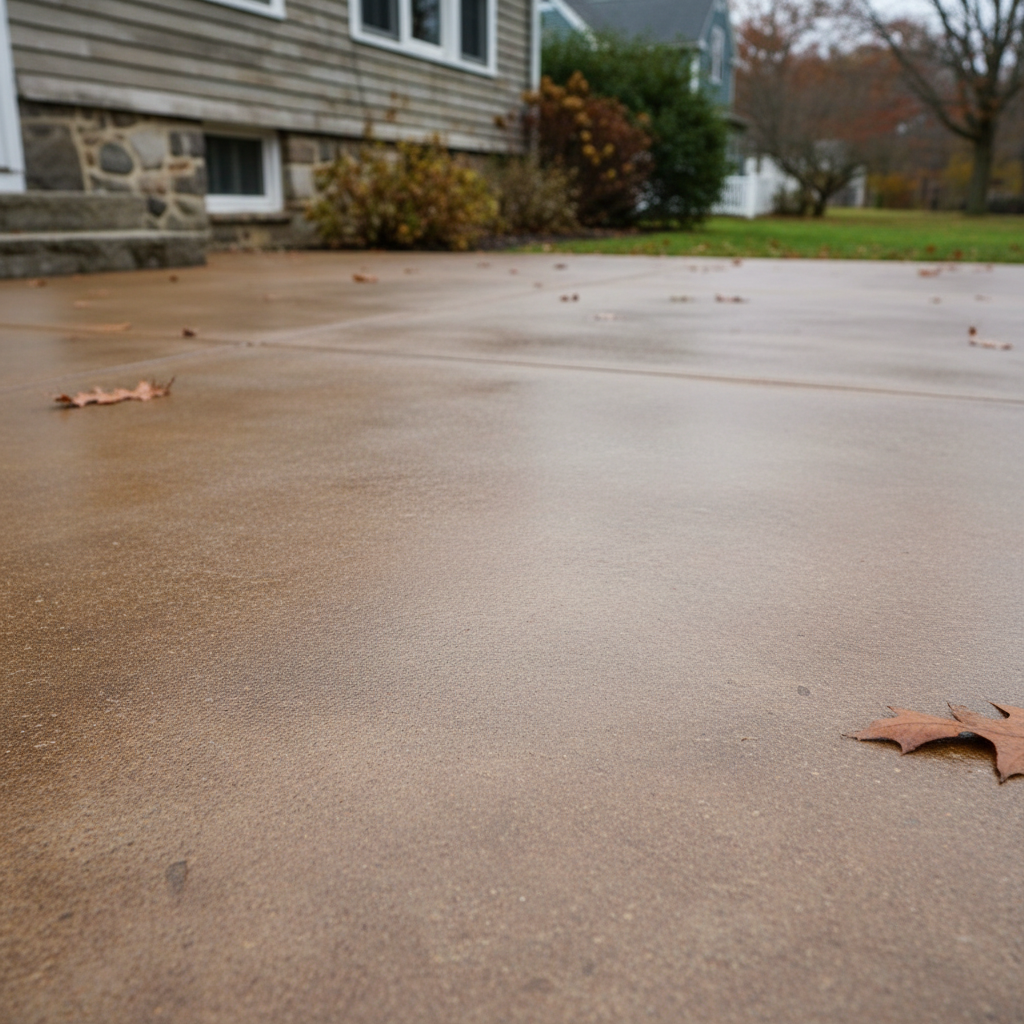
What's the difference between concrete stain and concrete paint?
This is probably the question I get asked most often. And it's a big one, because these two things are totally different animals. Concrete paint, just like any other paint, sits right on top of the surface. It forms a layer. That layer can chip, peel, and wear away, especially in busy areas or with our wild New England weather cycles. You've probably seen it on old garage floors or basement floors, haven't you? It just doesn't hold up for very long.
Concrete stain, on the other hand, isn't a coating at all. It soaks into the concrete surface, reacting with the lime content in the concrete to create a permanent, translucent color. Think of it like wood stain – it brings out the natural variations and texture of the concrete, instead of just covering them up. Since it's not a surface layer, it won't chip or peel. It actually becomes part of the concrete itself. That's why I always tell folks to go with staining over painting if they want a durable, long-lasting finish.
How long does stained concrete really last?
When we do it right, stained concrete can last for decades. No kidding. Because the color is integrated into the concrete, it doesn't just sit there waiting to wear off. The biggest thing that affects how long it lasts is proper sealing and maintenance. An exterior stained surface, like a patio or walkway, will need resealing every 2-5 years. That depends on how much foot traffic it gets, how much sun hits it, and how well you take care of it. Inside floors might go 5-10 years or even longer between reseals, especially if they're not getting a ton of abuse.
The trick is to protect that surface sealer. If the sealer wears down, the concrete underneath can start to show wear and tear, and the color might fade a bit over time. But even then, you're usually looking at a refresh, not a complete re-do. It's a very tough option when you compare it to other flooring types.
Can you stain existing concrete, or does it have to be new?
Absolutely, you can stain existing concrete! In fact, that's what we do most of the time. The concrete just needs to be clean, dry, and totally free of any old sealers, paints, glues, or grease. That's usually the hardest part – getting the surface prepped correctly. If there are old coatings, we'll need to strip them off. If there are oil stains, we have to degrease them thoroughly. Any cracks or spalling should be fixed before staining, because the stain will highlight those imperfections, not hide them.
The age of the concrete isn't as important as its condition. A well-maintained 20-year-old slab can often be stained beautifully, while a poorly maintained 5-year-old slab might be a bigger headache. We always do a thorough inspection to make sure your existing concrete is a good candidate for staining.
What kind of maintenance does stained concrete need?
Keeping stained concrete looking good is pretty straightforward, but it's important. For floors inside, regular sweeping or vacuuming and an occasional damp mop with a pH-neutral cleaner is usually all you need. Don't use harsh chemicals or abrasive cleaners, as these can dull or damage the sealer over time. You wouldn't use bleach on your hardwood floors, right? Same idea here.
For outside surfaces, like a patio or pool deck, you'll want to sweep regularly to get rid of debris. A good rinse with a garden hose and a soft brush can help with tougher dirt. For stubborn spots, a mild detergent and water will usually do the trick. The most critical part of exterior maintenance is keeping an eye on that sealer. If you notice water isn't beading up like it used to, or the surface looks dull, it's probably time for a fresh coat of sealer. That's what protects the color and the concrete itself from our harsh Wellesley winters and summer sun.
Will stained concrete make my floor slippery?
This is a common worry, especially for outdoor areas or basements. The stain itself doesn't make the concrete slippery. It's the sealer that can sometimes create a slick surface, especially when it's wet. However, there are easy ways to handle this. We can add a non-slip additive to the sealer, which creates a slightly textured surface without changing the look of the stain. It's usually a fine grit, like sand, that we mix into the sealer before we apply it.
For outdoor applications, like a walkway down to Lake Waban or a pool deck, we almost always recommend a non-slip additive. It's a small extra step that makes a big difference in safety. For interior floors, it depends on how you'll use it and what you prefer. Most homeowners find that a standard sealed interior floor isn't overly slippery, but if you're concerned, the additive is an option there too.
What color options are available, and how do I choose?
There are two main types of stains: acid-based and water-based. Acid stains react with the minerals in the concrete, creating translucent, earthy tones like browns, tans, greens, and blues. The final color is unique because it depends on the specific makeup of your concrete slab. It's not like picking a paint chip; it's more organic and variegated. You get a mottled, marbleized effect that's really beautiful and natural-looking.
Water-based stains, on the other hand, offer a much wider range of colors, including vibrant hues, and they give you a more opaque, uniform look if that's what you're after. They don't react with the concrete in the same way, so the color is more predictable. Many homeowners around here prefer the natural look of acid stains for their patios, while water-based might be used for a more contemporary basement floor.
Choosing a color can be tough. I always recommend looking at samples on actual concrete, not just in a brochure. We can even do a small test patch on an inconspicuous area of your concrete so you can see how it will look in your specific space and lighting. Think about the surrounding elements – your house color, landscaping, and interior decor. Don't be afraid to ask for my opinion; I've seen a lot of combinations over the years with All Star Concrete Co.
Can stained concrete be repaired if it gets damaged?
Repairing stained concrete can be a bit tricky, but it's often possible. If the damage is superficial, like a scratch in the sealer, it might just need a spot re-seal or a light buffing and re-sealing of the whole area. If the concrete itself is chipped or cracked, that's a different story. We can patch cracks and spalls, but because the stain penetrates the concrete and reacts with it, getting a perfect color match on a patch is incredibly difficult, if not impossible.
A patch will almost always be noticeable to some degree. We can try to blend it as best as possible, but it won't be invisible. That's why proper preparation and protection are so important from the start. Preventing damage is always easier than fixing it. If you have significant damage, sometimes the best option is to consider a resurfacing overlay that can then be stained, which gives you a fresh canvas.