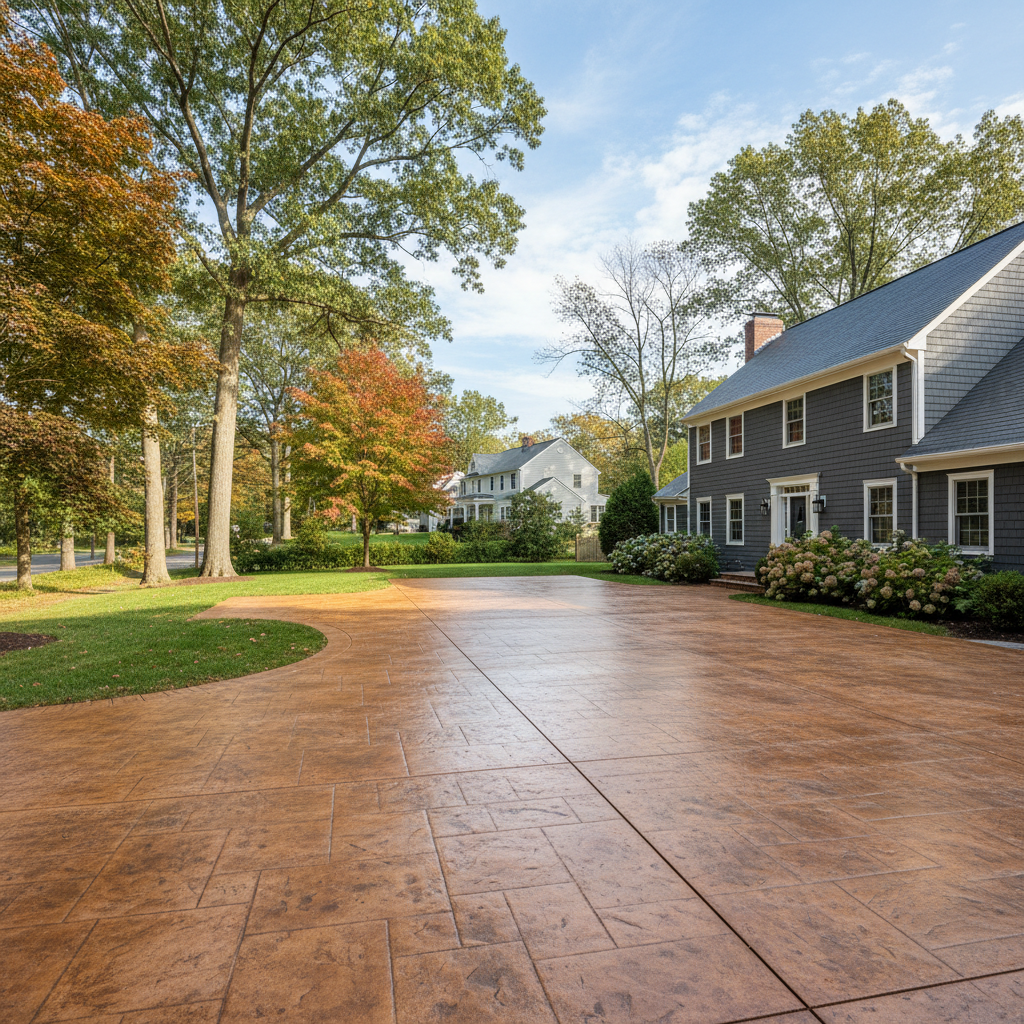
Got concrete around your Wellesley home, do you? Maybe it’s a patio, a walkway, or even the floor in your basement. For ages, concrete was just... well, concrete. Gray, useful, and not exactly a showstopper. But these days, people are figuring out you can do a whole lot more with it, and one of the best ways to really dress it up is with concrete staining.
Now, when I talk about staining, I’m definitely not talking about painting. That’s a common mix-up folks make. Paint just sits right on top of the concrete, and over time, especially with our New England weather, it’ll chip, peel, and end up looking pretty awful. Stains, on the other hand, actually soak into the concrete surface. They react with the minerals already in the concrete itself, creating a see-through, varied, and permanent color that won't fade, chip, or peel like paint does. It’s a much tougher, more natural-looking finish, if you ask me.
Why Staining Makes Good Sense in Wellesley
Here in Wellesley, we see all sorts of homes, from classic Colonials in the Cliff Estates to those more modern places near Lake Waban. And no matter the style, homeowners want their outdoor areas to look nice and last. Concrete staining fits right in. It can make things look like natural stone, terra cotta, or even wood, but for way less money and with much less upkeep. Think about those older, plain gray concrete patios that might be showing their age – a good stain can completely change their look without the headache and cost of tearing everything out and replacing it.
We also deal with some pretty rough conditions around here, don't we? Those harsh winters with all the freezing and thawing, plus the salt we spread on sidewalks and driveways, can really beat up concrete. A properly stained and sealed concrete surface adds an extra layer of protection against moisture getting in and just general wear and tear. It won't stop cracks if the ground underneath wasn't prepped right, but it certainly helps the surface last longer and look better.
Acid Stains vs. Water-Based Stains: What's the Difference?
You essentially have two main choices when it comes to concrete stains, and knowing what sets them apart is pretty important:
- Acid Stains: These are the classic option, and they’re still fantastic for certain jobs. Acid stains contain metallic salts that chemically react with the free lime in the concrete. This reaction creates a mottled, translucent, and truly unique color effect, kind of like natural stone. You can't perfectly predict the exact color you'll get because it depends on the concrete's makeup, which, honestly, is part of their charm. They’re super durable and won't fade. The downside? A limited color range, mostly earthy tones like browns, tans, and some blues/greens.
- Water-Based Stains: These are a newer option and give you a much wider palette of colors, including bright blues, reds, and even black. They don't chemically react with the concrete like acid stains do; instead, they soak into the surface and deposit pigment. You get a more consistent, solid color, though you can still get some beautiful varied effects if you apply them correctly. Plus, they're usually easier to apply and clean up.
Which one is right for your Wellesley project? It really just depends on the look you're going for and what kind of shape your existing concrete is in. For example, if you have an older patio that's been patched or has some uneven spots, an acid stain might actually highlight those differences, while a water-based stain could give you a more uniform appearance.
Why Local Expertise Really Matters for Staining
You might think staining concrete is a simple DIY job, but trust me, it’s not as easy as it looks. Especially in a place like Wellesley, where we often deal with older concrete, different soil conditions (sometimes that heavy clay soil can affect how concrete cures, you know?), and specific aesthetic expectations, you really want someone who knows what they’re doing.
A good contractor, like us at All Star Concrete Co, will know how to properly prepare the surface – and that’s probably the most crucial step. If the concrete isn’t clean, free of sealers, and etched correctly, the stain won't soak in evenly, and you’ll just end up with a splotchy mess. We also understand how different concrete mixes and ages can change the final stain color, particularly with acid stains. We've seen firsthand how a seemingly identical stain can look completely different on two patios just a few blocks apart in Wellesley Hills.
Plus, putting down stain needs a steady hand and a real understanding of how to get an even, natural look. And once it’s stained, it absolutely needs to be sealed correctly to protect that beautiful new finish. Picking the right sealer for our climate – something that can handle the freeze-thaw cycles and UV exposure – is just as important as the stain itself.
So, if you’re thinking about giving your concrete a fresh new look, don't just grab a bucket of stain and cross your fingers. Talk to a local professional who understands the ins and outs of concrete and our specific environment here in Wellesley. You’ll be glad you did when your patio or basement floor looks fantastic for years to come.