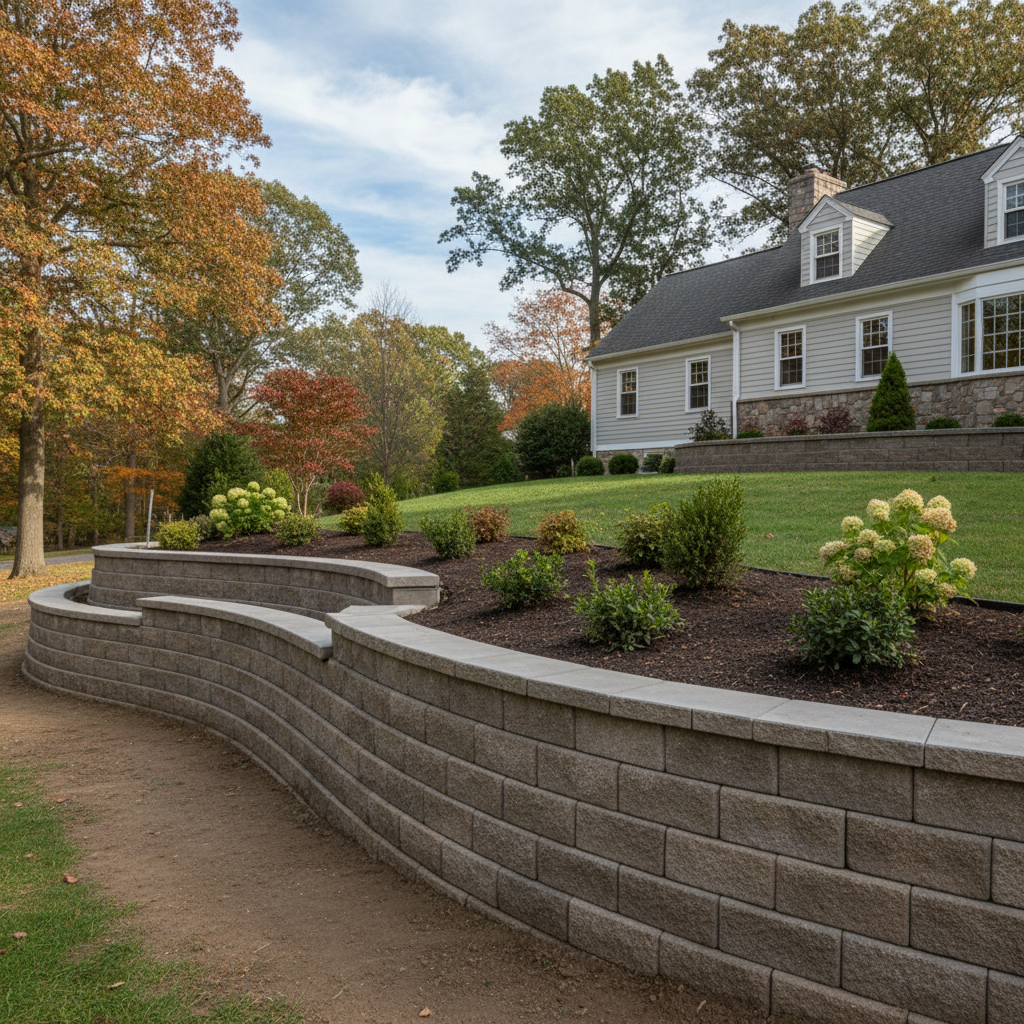
So, you're looking at putting in a concrete retaining wall. Maybe you've got a sloped yard, or you're trying to create some usable space. Good idea, a well-built retaining wall can really transform a property. But here's the thing: I've seen plenty of folks in Wellesley make some pretty common, and often expensive, mistakes when they're planning or hiring for these projects. Let's talk about how you can avoid that regret.
Mistake #1: Not Understanding Drainage
This is probably the biggest one, and it's a killer. A retaining wall's main job isn't just to hold back dirt; it's also to manage water. If you don't plan for proper drainage behind and through that wall, you're asking for trouble. Water builds up pressure, especially with our heavy New England rains and snowmelt. That pressure can crack, bow, or even completely fail a wall, no matter how strong the concrete is.
I'm talking about weep holes, gravel backfill, and often a perforated drain pipe (like a French drain) behind the wall, all tied into an appropriate discharge point. Don't let a contractor tell you it's 'not necessary' or 'too expensive.' If they do, that's a red flag. Skimping on drainage is like building a dam without an overflow – it's going to burst eventually.
Mistake #2: Ignoring the Foundation and Soil Conditions
A retaining wall is only as good as what it's built on. You can't just pour concrete on top of loose soil or fill dirt and expect it to last. The foundation needs to be properly excavated, compacted, and often reinforced. Here in Wellesley, especially in some of those older, established neighborhoods with varied terrain, you can run into all sorts of soil conditions – from good, stable loam to clay that expands and contracts, or even rocky areas. A good contractor will assess the soil, maybe even recommend a soil test for larger or taller walls. If they don't seem interested in what's under the ground, be wary. A shifting foundation means a shifting wall.
Mistake #3: Going for the Lowest Bid Without Due Diligence
I get it, everyone wants a good deal. But when it comes to something as structural and long-lasting as a concrete retaining wall, the lowest bid can often turn into the highest cost down the line. I've seen homeowners jump on a cheap price only to find out the contractor cut corners on materials, didn't pull permits, or just didn't have the experience to do the job right. Then they're calling me, All Star Concrete Co, to fix someone else's mess, which is always more expensive than doing it right the first time.
Always get multiple quotes, but don't just compare numbers. Compare what's included. Ask about their experience with retaining walls specifically. Ask for references, and actually call them. Check their licensing and insurance. A reputable contractor won't mind these questions; in fact, they'll expect them.
Mistake #4: Not Getting Permits or Understanding Local Codes
This isn't just about avoiding fines; it's about safety and ensuring the wall is built to proper engineering standards. Most retaining walls over a certain height (often 3 or 4 feet, depending on local rules) require a permit from the town of Wellesley. This means plans need to be reviewed, and inspections will happen during construction. This process is there to protect you, the homeowner, and your property. If a contractor suggests skipping the permit, run the other way. They're either inexperienced, trying to hide something, or both. A permit ensures that the work meets structural requirements and won't cause issues for you or your neighbors down the road.
Mistake #5: Focusing Only on Aesthetics, Not Function
Of course, you want your retaining wall to look good. We all do. But remember its primary purpose: to retain soil and manage water. Sometimes, homeowners get so caught up in the finish – the color, the texture, the capstones – that they overlook the critical structural elements. A beautiful wall that's failing structurally is just a very expensive pile of rubble waiting to happen.
A good contractor will discuss both the aesthetics and the engineering with you. They'll show you options for finishes that are durable and appropriate for our climate, while also ensuring the wall is robustly designed and built from the ground up. It's about finding that balance between a functional, long-lasting structure and a visually appealing addition to your landscape.
Building a concrete retaining wall is a significant investment. Do your homework, ask the tough questions, and don't be afraid to walk away if something feels off. It'll save you a lot of headaches and money in the long run.