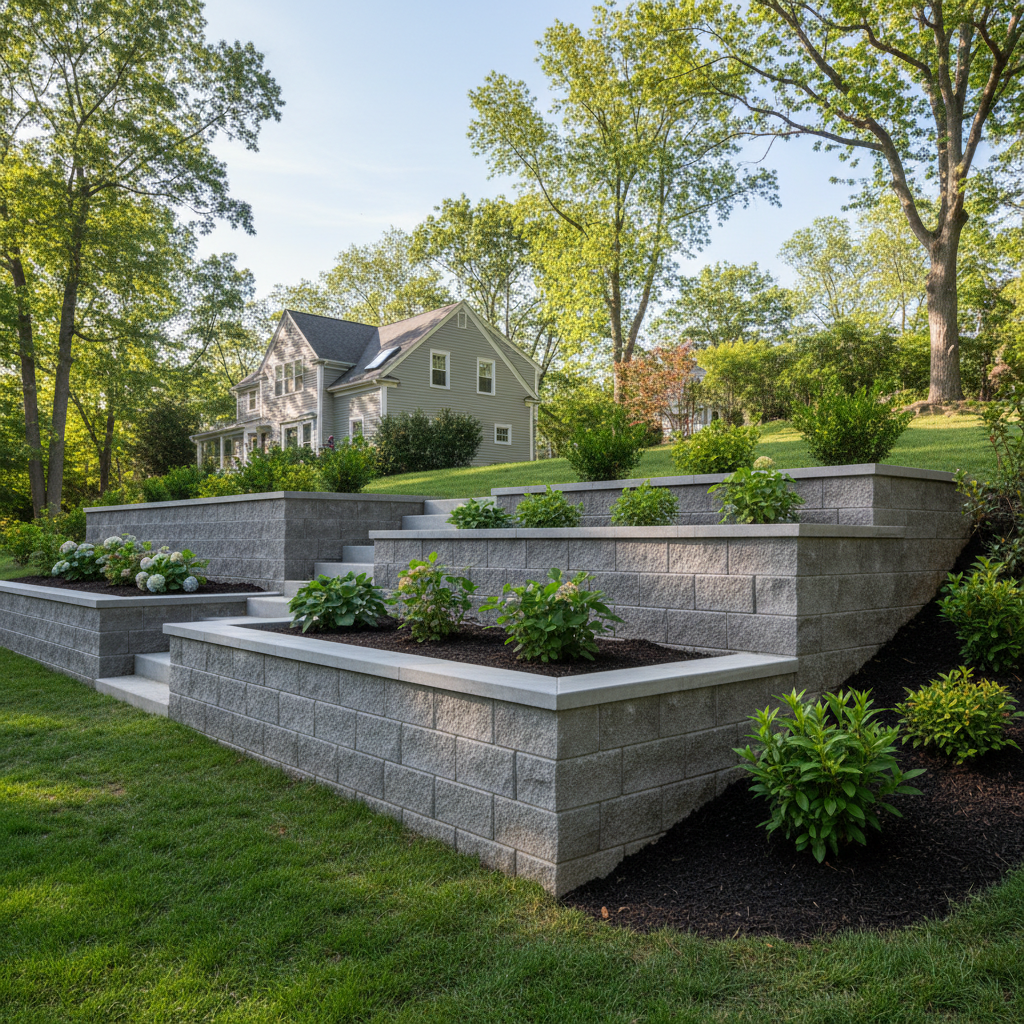
You're looking at your yard, maybe dealing with a slope, or just want to create some usable space. A concrete retaining wall sounds like a solid solution, right? It usually is, but I've seen my share of homeowners in Wellesley make some pretty common mistakes that turn a good idea into a real headache. Let's talk about what to watch out for so you don't end up regretting your investment.
Mistake #1: Skipping the Site Evaluation
This is probably the biggest one. People often call me up, tell me they want a 4-foot wall here, a 6-foot wall there, and they've already got a design in their head. But they haven't really considered what's actually going on underneath their feet. Wellesley has some pretty varied soil conditions, from sandy loam to heavy clay, especially around areas like the Morses Pond watershed. That soil type dictates a lot about how a retaining wall needs to be built, from the foundation depth to the drainage requirements. If you don't get a proper site evaluation, you're building on guesswork, and that's a recipe for failure. The wall could shift, crack, or even collapse if the ground isn't stable or prepared correctly. A good contractor, like us at All Star Concrete Co, will always insist on a thorough look at your site before even talking design.
Mistake #2: Underestimating Drainage Needs
Water is the enemy of any retaining wall. I can't stress this enough. When you hold back a hillside, you're also holding back all the water that's trying to flow downhill. If that water can't escape, it builds up pressure behind your wall. This hydrostatic pressure is incredibly powerful, and it's the number one cause of retaining wall failure. I've seen walls bulge, crack, and even lean over because homeowners or inexperienced contractors didn't put in proper drainage. You need a good gravel backfill, a perforated drain pipe (often called a 'French drain'), and weep holes to let that water out. Don't skimp on this. It's not visible once the wall is done, but it's absolutely critical to its longevity.
Mistake #3: Not Getting Proper Permits or Engineering
This one can get you into real trouble with the town. For any retaining wall over a certain height (it varies, but generally 3-4 feet), you're going to need a building permit from the Town of Wellesley. And for taller or more complex walls, you'll almost certainly need a structural engineer to design it. Some folks try to cut corners, thinking they can just build it themselves or hire someone who doesn't pull permits. That's a huge red flag. Not only could you face fines, but if the wall fails, your insurance might not cover it, and you'll be on the hook for a much more expensive repair. A reputable contractor will guide you through the permitting process and tell you when an engineer is required. It adds to the upfront cost, sure, but it's peace of mind and structural integrity you're paying for.
Mistake #4: Focusing Only on the Lowest Bid
I get it, everyone wants a good deal. But when it comes to something as structural and important as a retaining wall, the lowest bid isn't always the best deal. Often, those super low prices mean corners are being cut – maybe they're using cheaper materials, not doing proper drainage, or they're not licensed and insured. Ask for references, check their insurance, and make sure they've got a good track record specifically with retaining walls. A contractor who gives you a detailed proposal, explains their process, and stands by their work might not be the cheapest, but they'll save you money and headaches in the long run. You're investing in your property's stability and value, so choose wisely.
Mistake #5: Ignoring the Aesthetics and Material Choice
While function is paramount, you also want your retaining wall to look good. It's a prominent feature in your yard! Some homeowners just pick the cheapest block or concrete option without thinking about how it integrates with their existing landscape or home's style. Concrete retaining walls can be incredibly versatile – you can choose from different textures, colors, and even stamped patterns to mimic natural stone. Think about the overall curb appeal. Will it complement your home's brick or siding? Will it blend with your landscaping? Don't just slap up a gray concrete block wall if it's going to stick out like a sore thumb. A little planning here goes a long way in making your outdoor space truly shine.
Building a concrete retaining wall is a significant project. Do your homework, ask the right questions, and don't be afraid to walk away from a contractor who gives you a bad feeling or tries to rush things. You want a wall that's going to stand strong for decades, not one that's going to cause you problems a few years down the road. If you're in Wellesley and thinking about a retaining wall, give us a call at All Star Concrete Co. We're happy to talk through your project and make sure it's done right from the start.